INR – Indian Rupee
 EUR – Euro
 NZD – New Zealand Dollar
 PKR – Pakistani Rupee
 PHP – Philippine Peso
 BDT – Bangladeshi Taka
 LKR – Sri Lankan Rupee
 NPR – Nepalese Rupee
 MMK – Myanmar Kyat
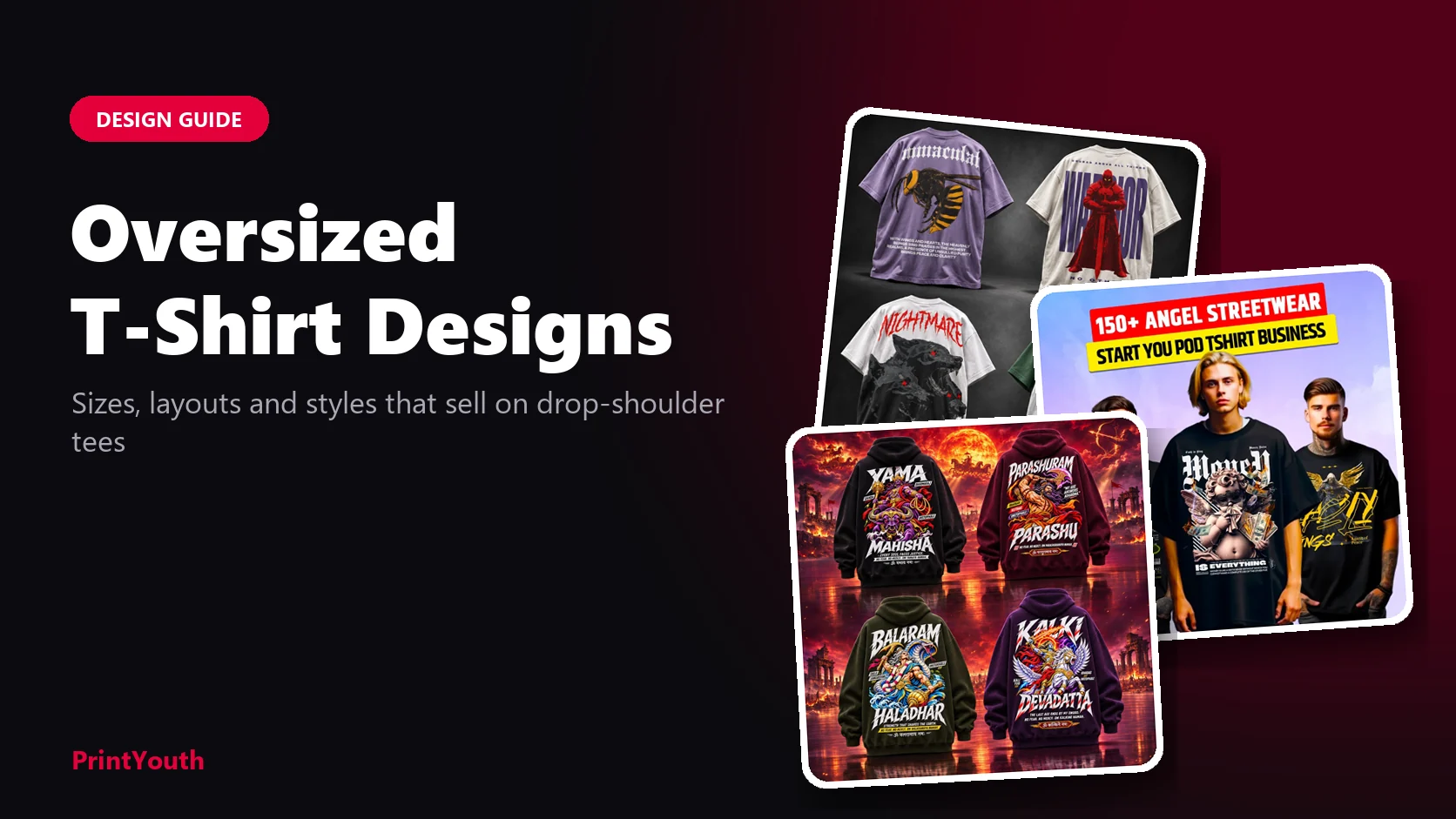
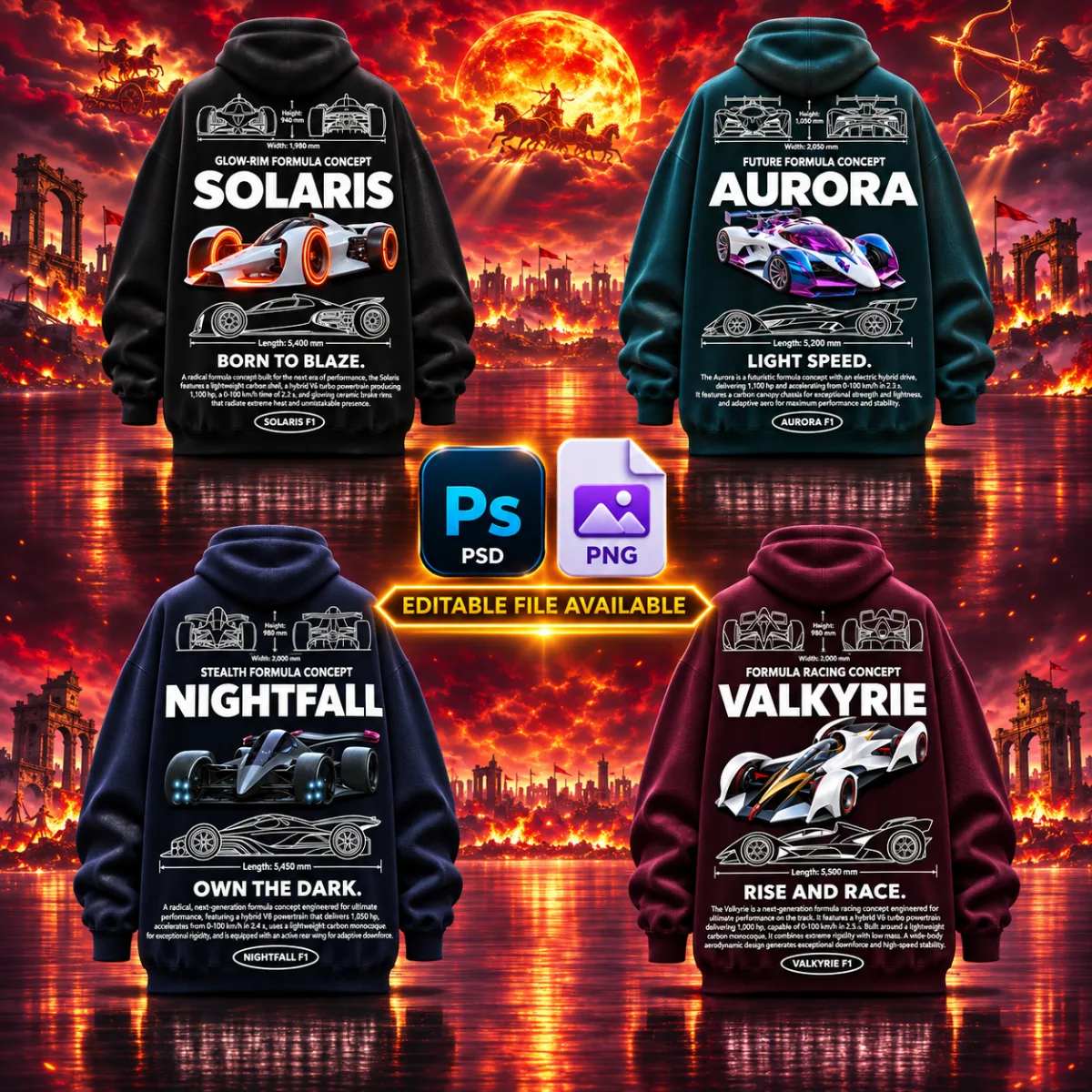
Oversized t-shirt designs should be printed bigger and lower than on regular tees: about 12–14 inches wide on the back, with the top 5–6 inches below the collar, and a small 3–4 inch chest logo or a 12-inch front print placed 4–5 inches down. Bold back graphics, minimal fronts, vertical typography and streetwear art sell best on heavy 220–260 GSM blanks.
Oversized tees are the default cut for young Indian buyers now. Brand after brand, from big names to Instagram labels, leads with drop-shoulder, boxy, heavyweight tees. And a design that looks perfect on a regular tee often looks small, high and lost on an oversized one.
This guide covers what changes when you design for oversized fits: print size, placement, layout and the styles that sell.
What size should a design be on an oversized t-shirt?
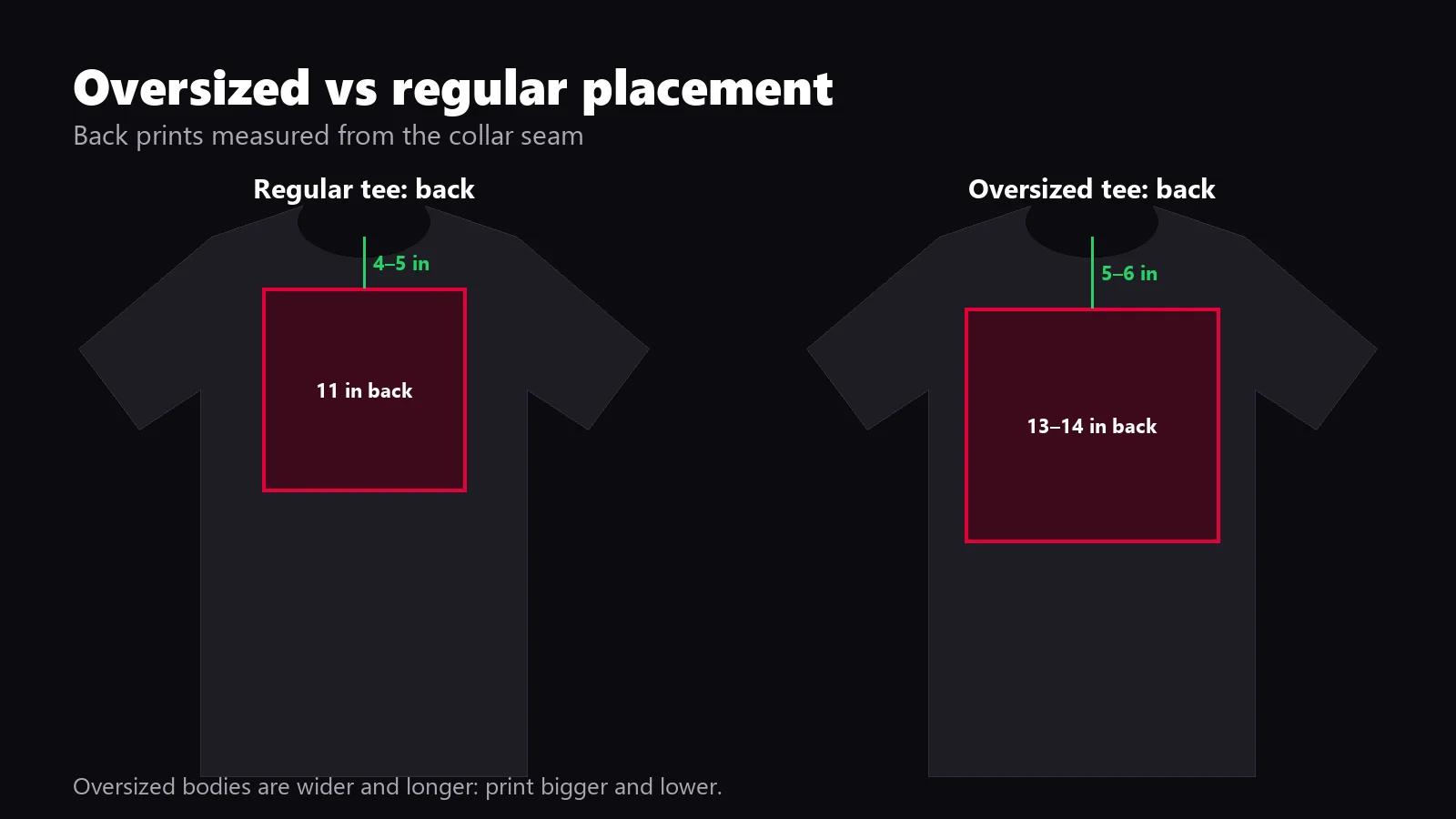
On an oversized t-shirt, a back print should be about 12–14 inches wide (30–36 cm) and a front print 11–12 inches. Chest logos stay small at 3–4 inches. At 300 DPI that means files of roughly 3600–4200 pixels wide for the big prints.
| Placement | Regular tee | Oversized tee |
|---|---|---|
| Full back width | 10–12 in | 12–14 in |
| Back print top edge | 4–5 in below collar | 5–6 in below collar |
| Full front width | 10–11 in | 11–12 in |
| Front print top edge | 3–4 in below collar | 4–5 in below collar |
| Chest logo | 3–4 in | 3–4 in |
For pixel sizes at every placement, see our t-shirt design size chart, and for pressing positions, the DTF size and placement chart.
Why do oversized designs need to sit lower?
Oversized tees have dropped shoulders and a wider, longer body, so the visual centre of the chest and back sits lower than on a regular tee. A print placed at the usual height looks like it's riding up towards the collar and can fold into the neckline when worn.
Check placement on a real person, not a flat mockup. Put the shirt on someone, stand back, and mark where the print looks centred. Then measure from the collar seam and use that number for every shirt in that blank style.
Which layouts work best on oversized tees?
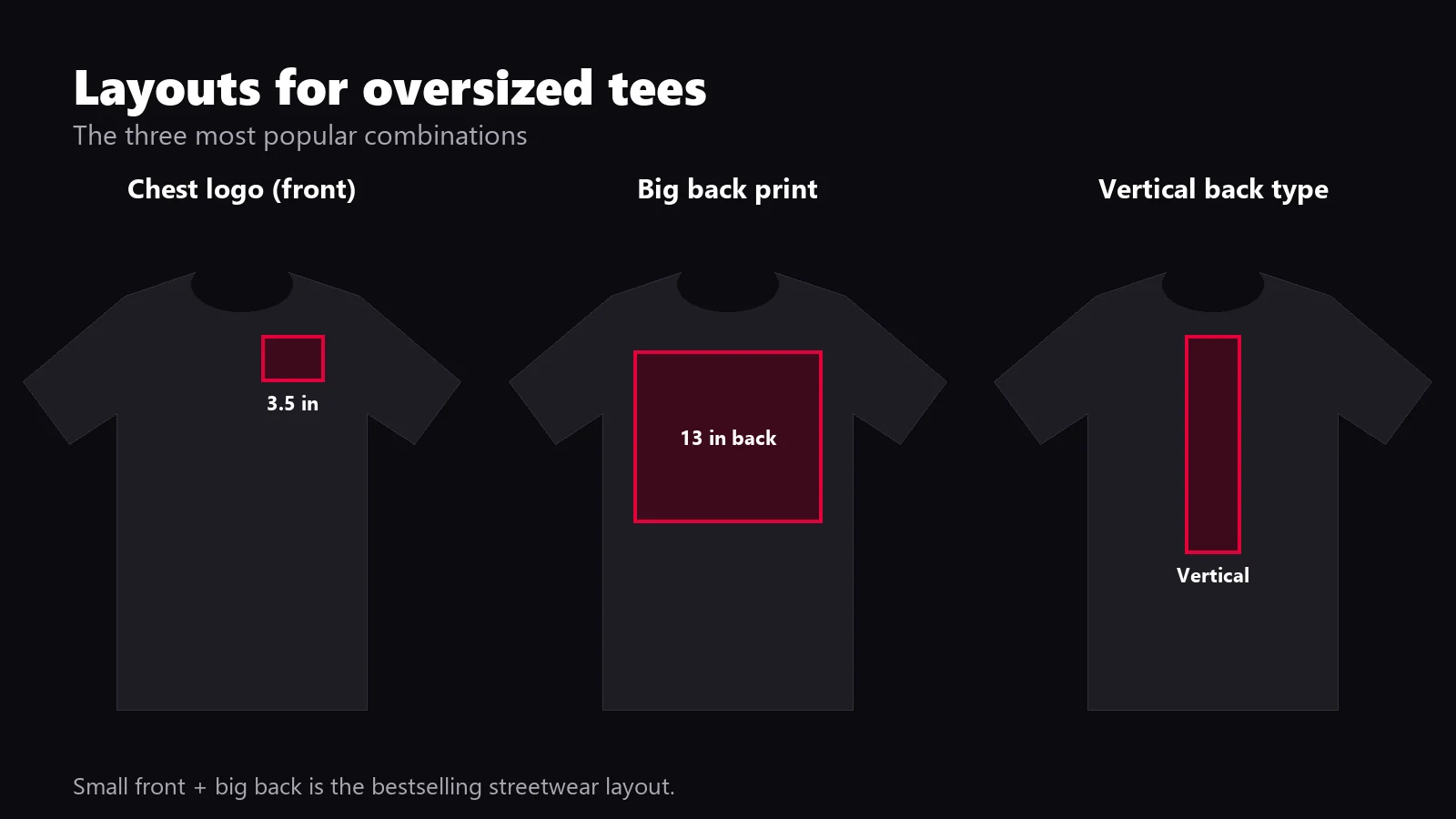
The layouts that work best on oversized tees are a big back print with a small front chest logo, a full front graphic with nothing on the back, vertical typography running down the back, a back print with a small text line near the hem, and sleeve prints that add detail without clutter.
- Small front + big back: the classic streetwear layout and the bestseller.
- Full front only: simple, cheaper to print, great for typography.
- Vertical back type: a word or phrase running down the spine.
- Back + hem line: big graphic with a small slogan near the bottom edge.
- Sleeve accent: a 3-inch logo or word on one sleeve for a branded feel.
What design styles sell on oversized t-shirts?
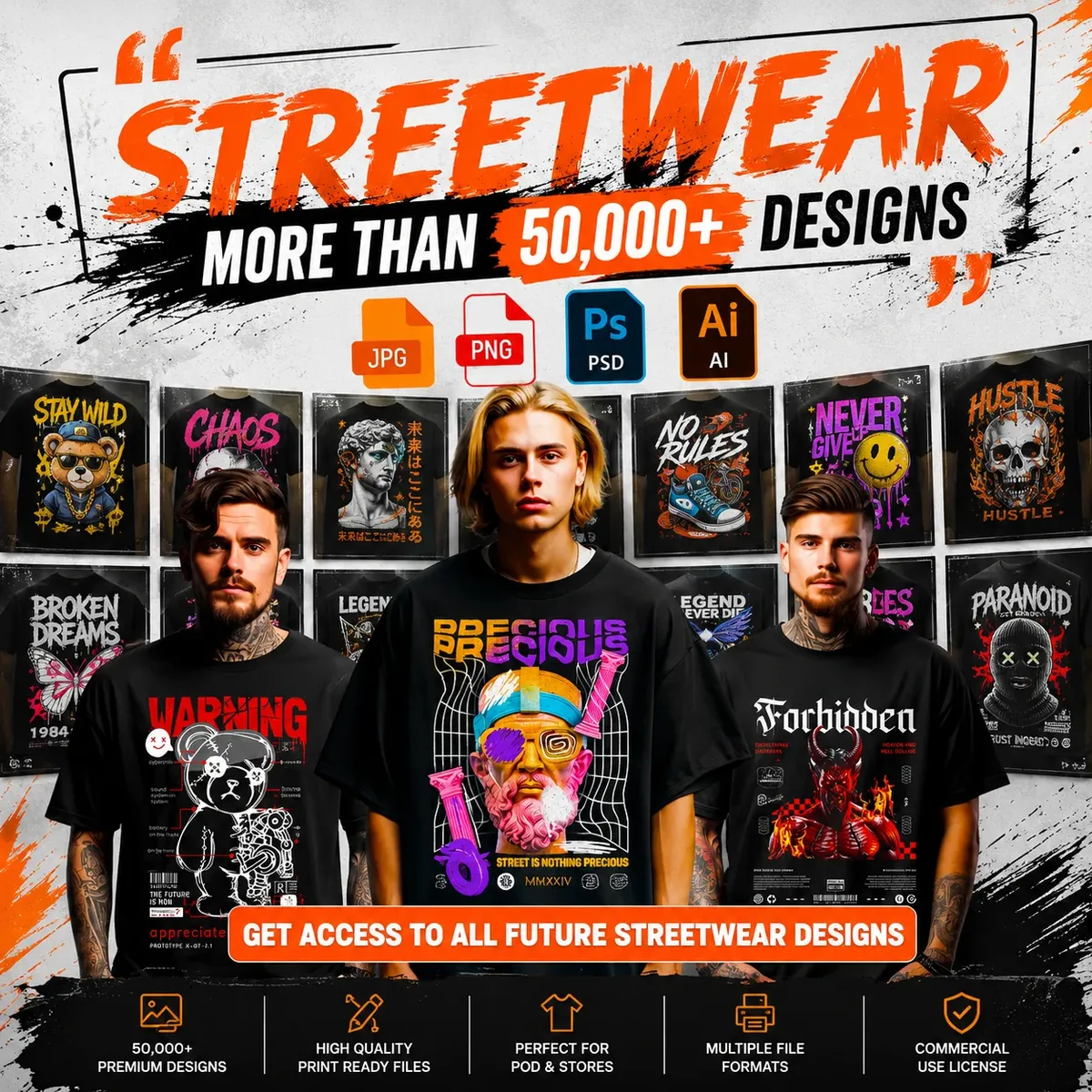
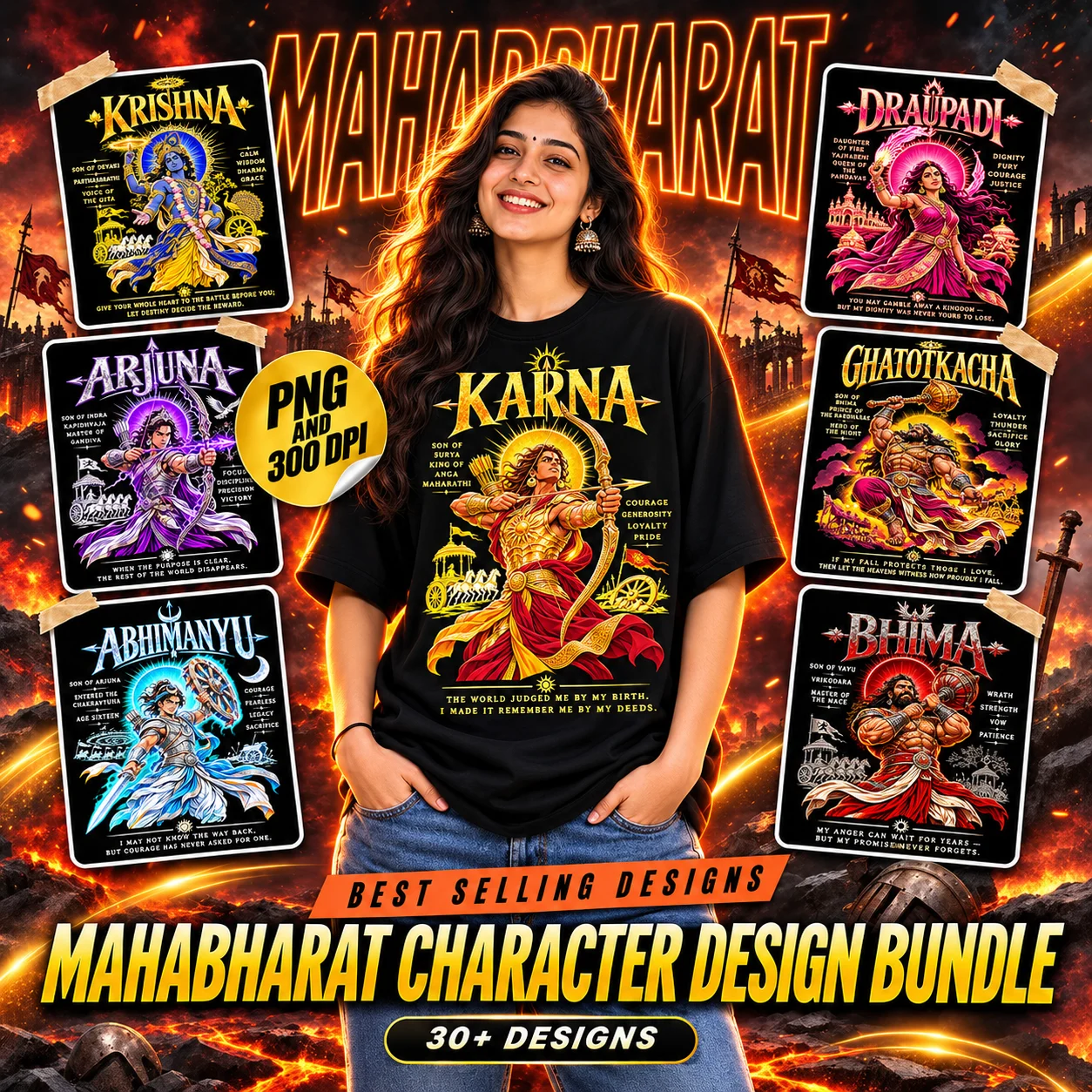
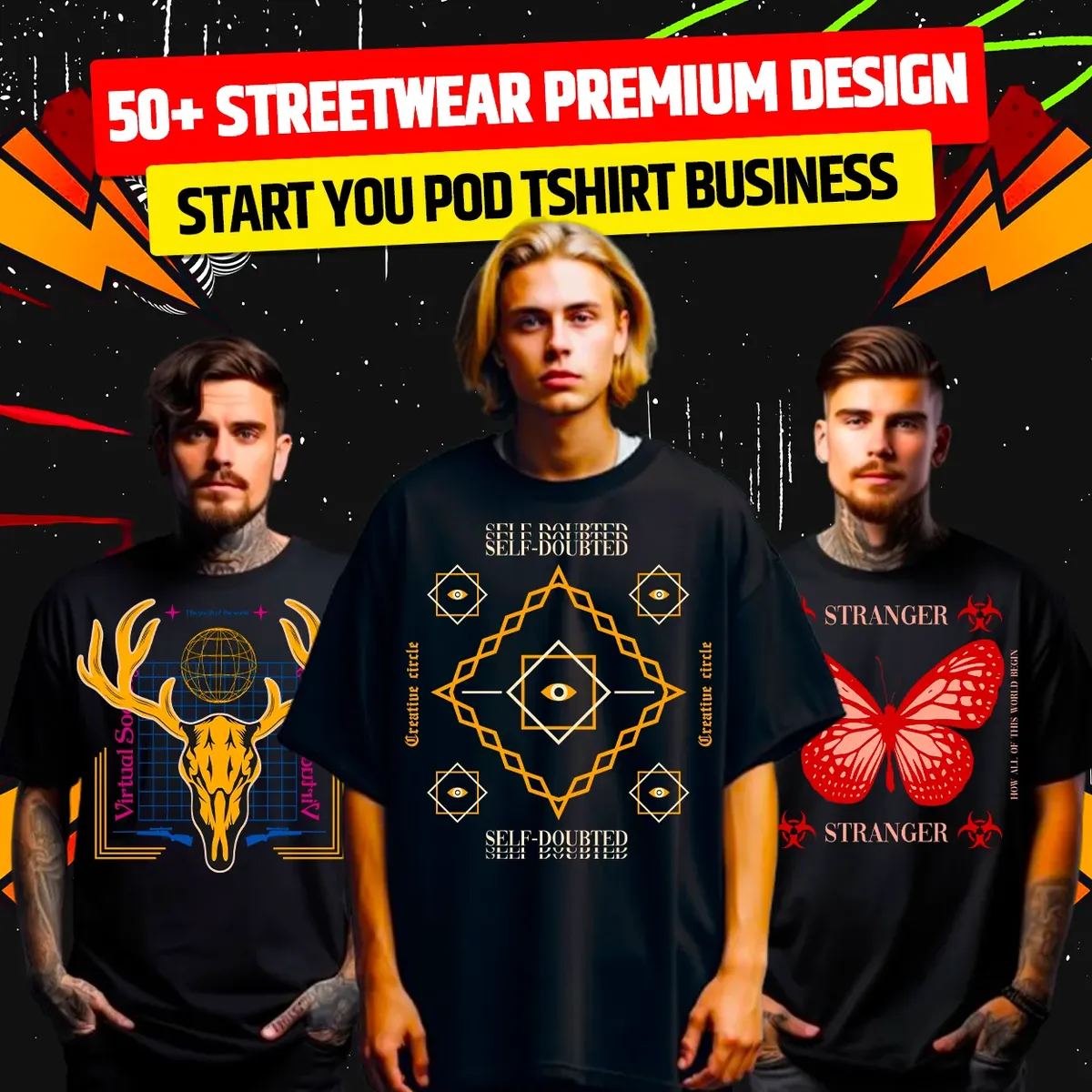
Bold streetwear graphics, gothic and blackletter text, classical statue and angel art, mythology warriors, sarcastic slogans, minimal typography and dark-fantasy illustrations sell best on oversized tees. Large detailed back prints show off the extra fabric; small fronts keep the look clean.
The cut itself says "streetwear", so the designs should too. Our streetwear design ideas list twelve styles, and almost all of them are built for oversized backs. Packs like the Angel Streetwear pack and the Wild Warrior pack are designed with big back prints in mind.
Which oversized blank should you print on?
Print on a heavy cotton oversized blank, around 220–260 GSM, with dropped shoulders and a slightly longer body. Heavier fabric holds large prints without puckering, feels premium and justifies a higher price, while thin 160–180 GSM "oversized" tees look cheap with a big graphic.
GSM is grams per square metre, a measure of fabric weight. Indian blank suppliers commonly sell oversized tees from about 180 to 260 GSM. Order samples of two or three before buying stock, wash them twice, and check shrinkage and how the print holds up.
How should you print designs on oversized tees?
DTF is the most practical method for large full-colour back prints on oversized tees in small runs. Screen printing works well for simple one- or two-colour designs in bulk. Use a heat press large enough for 14-inch prints, ideally 16 × 20 inches or bigger, and a pressing pillow under seams.
Big prints show every flaw, so files matter: transparent PNG at 300 DPI at the full 13–14 inch size, halftone shading instead of large solid areas so the print doesn't feel like a heavy patch, and clean edges. Press settings are in our DTF heat press chart.
Frequently asked questions
How big should a back print be on an oversized t-shirt?
About 12–14 inches wide (30–36 cm), with the top edge 5–6 inches below the collar seam. That's roughly 3600–4200 pixels wide at 300 DPI.
Where should I place a front print on an oversized tee?
Place the top 4–5 inches below the collar seam, slightly lower than on a regular tee, so it sits centred on the chest of the wider, longer body.
What GSM is best for oversized t-shirts?
Around 220–260 GSM cotton holds large prints well and feels premium. Lighter oversized tees can look thin and cheap with a big graphic.
Which designs look good on oversized t-shirts?
Bold back graphics with a small chest logo, gothic typography, angel and statue art, mythology warriors, sarcastic slogans and minimal text all suit oversized fits.
Can I use regular t-shirt designs on oversized tees?
Yes, if the files are large enough to print 12–14 inches wide and you adjust placement lower. Small files scaled up will look soft.
Is DTF good for oversized t-shirt prints?
Yes. DTF handles large full-colour prints on dark oversized tees in small quantities. Use halftones instead of solid fills to keep big prints soft.
The short version
Go bigger and lower: 12–14 inch backs 5–6 inches below the collar, small chest logos, heavy 220–260 GSM blanks, and bold streetwear styles. Use full-size files with halftone shading, and check placement on a person.
Designs built for oversized backs are in the Unlimited Streetwear Bundle, with editable PSD and EPS files.
Last updated: 22 November 2026.