INR – Indian Rupee
 EUR – Euro
 NZD – New Zealand Dollar
 PKR – Pakistani Rupee
 PHP – Philippine Peso
 BDT – Bangladeshi Taka
 LKR – Sri Lankan Rupee
 NPR – Nepalese Rupee
 MMK – Myanmar Kyat
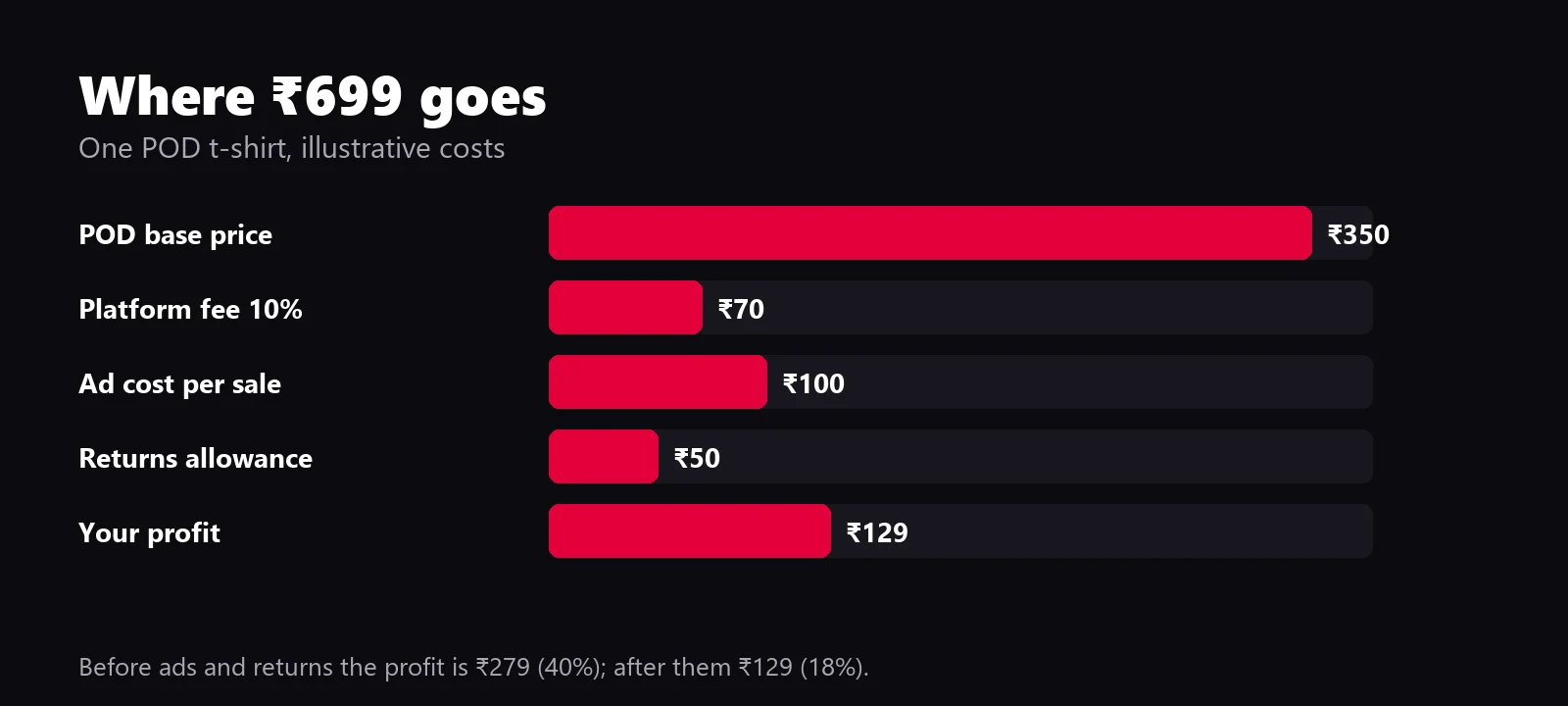
A good print-on-demand profit margin in India is about 25–40% of the selling price before advertising, and 10–20% after ads and returns. On a ₹699 t-shirt with a ₹350 base cost and a 10% platform fee, you keep about ₹279 (40%) before ads; a ₹100 ad cost per sale cuts that to about ₹179 (26%).
Print-on-demand margins look generous in calculators and shrink in real life. The calculator shows price minus base cost. Your bank account shows price minus base cost, fees, ads, returns, free shipping you promised and the discount code you posted on Instagram.
Here's the same t-shirt worked through three times, from the tidy version to the honest one, so you can see where the money actually goes.
What is a good profit margin for print on demand?
A good print-on-demand profit margin is 25–40% before marketing costs and 10–20% after them. Qikink, an Indian POD company, says in its profit margin guide that POD sellers average around 30% and that good margins typically sit between 15% and 35%.
Margin is profit divided by selling price. If you sell a shirt for ₹699 and keep ₹210, your margin is 30%. Markup is a different number: profit divided by cost. Sellers mix the two up all the time, and it leads to underpricing. A "100% markup" on a ₹350 base cost is a ₹700 price and only a 50% margin, before any fees.
How do you calculate print-on-demand profit in rupees?
Calculate print-on-demand profit by subtracting the POD base price, platform or payment fees, advertising cost per sale and an allowance for returns from the selling price. Then divide the result by the selling price to get your margin.
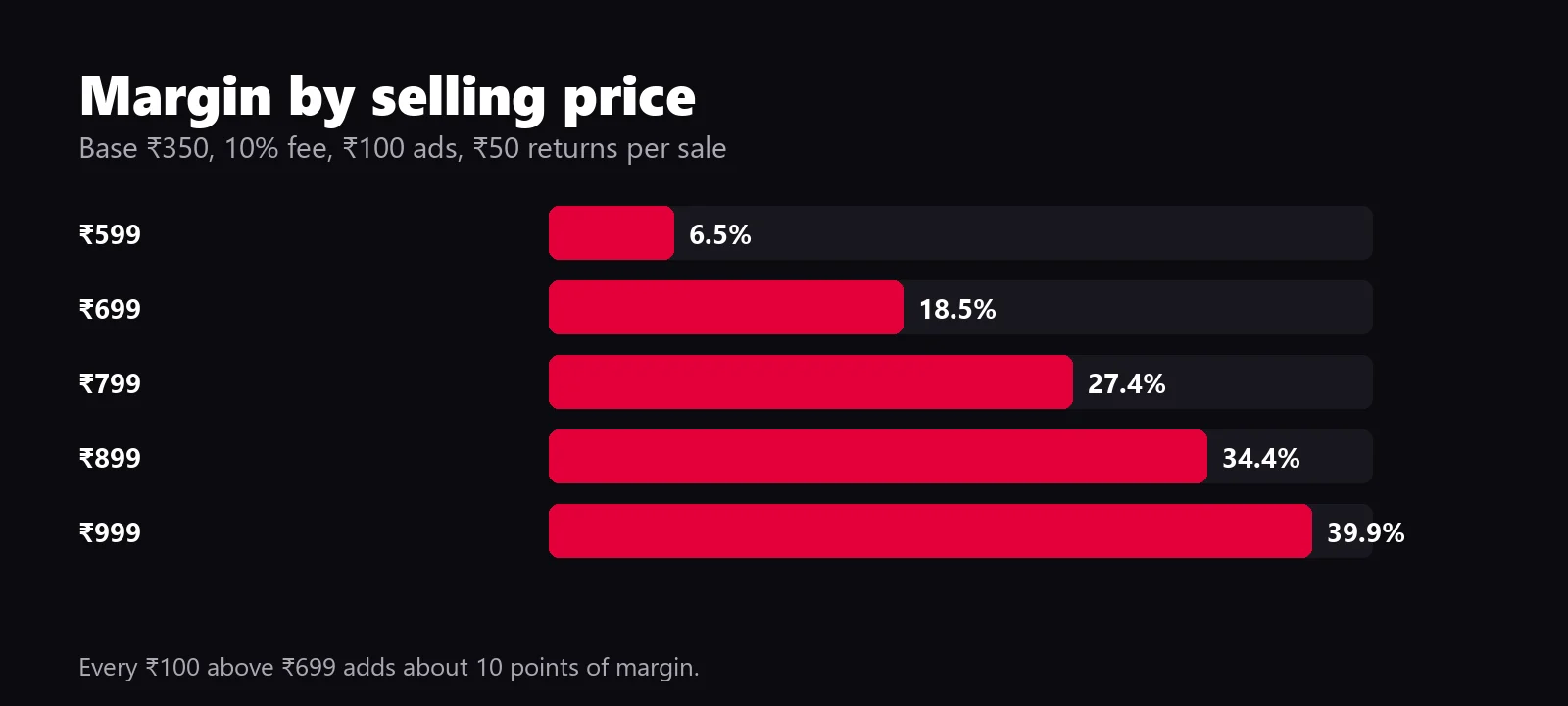
Qikink's own worked example uses a ₹699 shirt, a ₹350 base price covering printing, packing and shipping, and a 10% platform fee of ₹69.90. That leaves ₹279.10, a 39.9% margin. It's a correct calculation. It just stops before the two costs that decide whether a POD store survives: ads and returns.
| ₹699 t-shirt | Calculator view | With ads | With ads + returns |
|---|---|---|---|
| Base price (print, pack, ship) | 350 | 350 | 350 |
| Platform / payment fee (10%) | 70 | 70 | 70 |
| Ad cost per sale | 0 | 100 | 100 |
| Returns allowance | 0 | 0 | 50 |
| Profit | 279 | 179 | 129 |
| Margin | 40% | 26% | 18% |
The ad and returns figures are illustrative. Your ad cost per sale might be ₹40 if your Instagram page sells organically, or ₹250 if you're buying cold traffic. Put your own numbers in the same table.
Why do returns hurt print-on-demand sellers in India?
Returns hurt because a returned print-on-demand shirt can't be resold as new stock easily, and cash-on-delivery orders that are refused at the door still cost you the base price and both-way shipping. Even a modest return rate can wipe out a third of your profit.
Cash on delivery is the hidden margin killer in India. A buyer who orders on impulse and refuses the parcel costs you the full print and shipping, with nothing to show for it. Three practical defences: offer a small discount for prepaid orders, confirm COD orders by WhatsApp before printing, and keep size charts clear so fewer shirts come back for fit.
How can you increase your print-on-demand profit margin?
Increase print-on-demand margin by raising prices through a stronger niche and better designs, lowering ad cost with organic content, cutting returns with prepaid incentives and size charts, and moving proven bestsellers to cheaper local DTF printing. Price is the biggest lever.
- Charge more: a ₹799 niche tee with a recognisable style often sells as well as a ₹599 generic one. The extra ₹200 is almost pure profit.
- Bundle: "two tees for ₹1,299" raises order value while shipping cost per shirt falls.
- Grow organic reach: every sale from reels or repeat buyers has no ad cost.
- Cut returns: prepaid discounts, WhatsApp COD confirmation and honest size charts.
- Move winners to local DTF: once a design sells steadily, printing it yourself can roughly halve the per-shirt cost.
Do designs affect print-on-demand margin?
Yes. Designs decide what price buyers accept and how much you spend on ads to sell each shirt. Distinctive designs in a clear niche convert better, so each sale costs less in ads, and they support higher prices than generic graphics everyone else is also selling.
Design cost matters too, but less than people think. If you buy a ₹1,999 bundle and sell 100 shirts from it in a year, design cost is about ₹20 per shirt. A custom design at ₹1,500 needs to sell many shirts before it pays for itself. That's why most profitable small POD stores build their catalogue from licensed designs and spend their energy on niche, photos and marketing.
One caution: designs with film characters or team logos sell easily and then get removed, along with any money you spent advertising them. Original artwork protects the margin you've worked for.
Is print on demand still profitable in India in 2026?
Print on demand is still profitable in India for sellers who choose a niche, price above ₹649–₹699 and control ad and return costs. It's rarely profitable for sellers who compete on the lowest price on marketplaces with generic designs, because base costs leave too little room.
The honest summary: POD is a low-risk way to start and to test designs, not the highest-margin way to run a t-shirt business forever. Many sellers use POD for the long tail of their catalogue and print their top 10 designs locally. For a full launch walkthrough, see how to sell t-shirts online in India.
Frequently asked questions
What is the average profit margin in print on demand?
Around 30% before marketing costs, according to Indian POD company Qikink, with good margins typically between 15% and 35%. After ads and returns, 10–20% is common for small stores.
How much profit do you make per print-on-demand t-shirt in India?
On a ₹699 tee with a ₹350 base cost and a 10% fee, about ₹279 before ads. After a ₹100 ad cost per sale, about ₹179, and less once returns are counted.
What is the difference between margin and markup?
Margin is profit divided by selling price; markup is profit divided by cost. A ₹350 shirt sold for ₹700 has a 100% markup but only a 50% margin before fees.
What price should I sell a print-on-demand t-shirt for in India?
Most sellers price between ₹599 and ₹999. Prices under about ₹599 leave very little after base cost, fees and ads, unless your sales are mostly organic.
Is print on demand better than printing yourself?
Print on demand has almost no risk but lower margins. Printing yourself with DTF has higher margins but needs stock, a press and your time. Many sellers test with POD, then print bestsellers locally.
How do I reduce returns in my t-shirt store?
Offer a prepaid discount, confirm cash-on-delivery orders on WhatsApp before dispatch, show a clear size chart with measurements, and use real photos so the shirt looks the same on arrival.
The short version
Expect 25–40% before ads and 10–20% after ads and returns. Use real ad and return numbers in your maths, price above ₹699 where your niche allows, and move bestsellers to local printing when they prove themselves.
To keep design cost per shirt low, the Unlimited Streetwear Bundle and the Whole Shop Bundle give you a full licensed catalogue for one price.
Last updated: 22 November 2026.